Your Waiting Room TV Is Costing You Money
Walk into ten lobbies and you'll see eight of them with the same setup: a 50-inch TV bolted to the wall, tuned to a muted news channel, occasionally to HGTV reruns. Sometimes nothing — just the cable-box screensaver.
That TV cost the practice $400 to buy, $80 to mount, and uses about $30 of electricity a year. Then it sits there for the next five years, doing nothing for the business that owns it.
That's not signage. That's furniture.
The math nobody runs
A clinic with one waiting room TV that runs for 8 hours a day across 250 working days a year is showing roughly 2,000 hours of screen time to patients. If just 1 in 5 patients glances at it — generous, given most patients are on their phone — that's hundreds of impressions per week.
Now look at what's on it. A muted weather forecast for a city your patients already live in. A real estate show. The volume off because nobody wants to hear it.
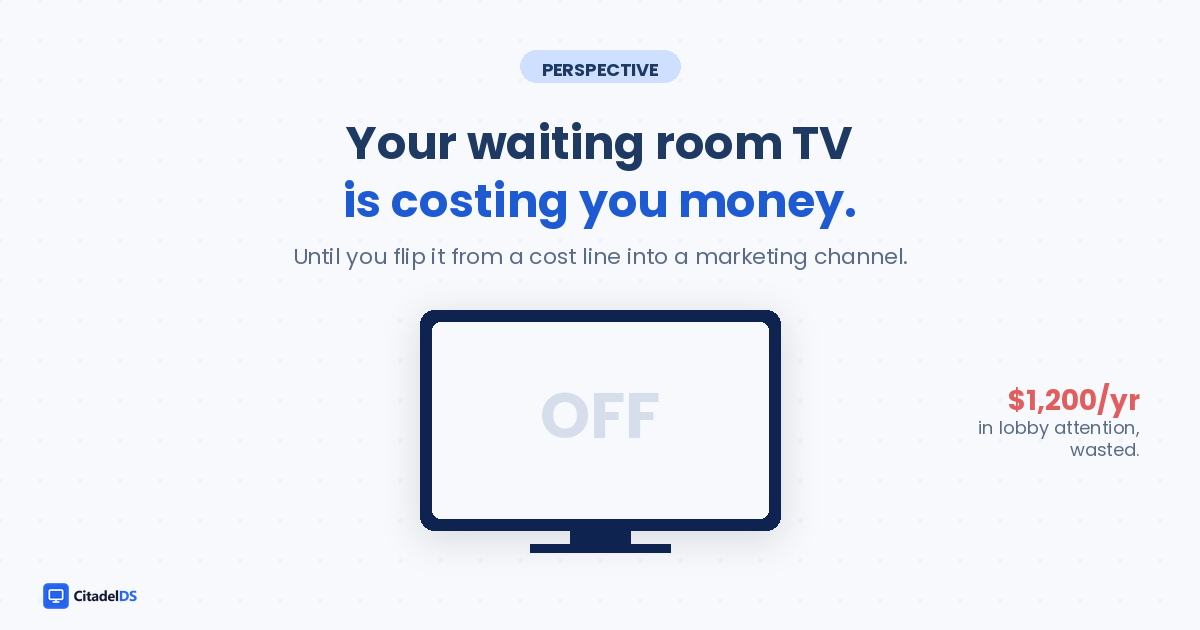
The closest thing to a quantifiable cost: lost lobby attention worth roughly $1,200/yr per screen, calculated as the cost-per-impression a clinic would pay for the same eyeballs in a print ad or local sponsorship.
The TV is already there. Already paid for. Already running. The only question is whether you're using it.
What "flipping it" actually means
Replacing the TV is not the move. Plugging something into it that does work is.
The bar isn't high:
- Show what's new this month — a flu shot promo, a new provider, the seasonal screening
- Show a verified review — patient feedback rotating once a minute with the practice rating
- Show your hours and calling info — surprisingly, patients walking out are the highest-intent audience to remind to book a follow-up
- Show local weather — the only thing patients actually look at on muted news anyway, and now it's branded
The hardware that drives this is a $60 plug-and-play stick. The software that schedules it costs less than a mid-tier phone plan per month. Total switching cost: under $100 per screen, with no contract.
What changes when you do this
We've watched a few hundred clinics run this transition. The pattern is consistent:
- Front-desk hours saved on "do you have a flyer for [new service]?" — patients see the flyer on the screen before they ask
- Conversion lift on internal referrals (your existing patient seeing a screening they didn't know you offered)
- Reduction in printed-poster spend — you stop reprinting because the screen replaces the poster
- Better Google review velocity, because the lobby reminds patients to leave one
None of that requires an ad agency or a graphic designer. Most of it is built from the templates that ship with modern signage software.
What this means for your team
If you have a TV in the waiting room and it's playing anything other than your own content, you have a marketing channel that's currently aimed at HGTV instead of at growing your practice.
The economics are stupid: $17 per month per screen, with hardware under $100 and a 14-day free trial to prove it works for you before you pay anything. The hardest part of the project is plugging an HDMI cable in.
The TV is already paid for. The patient is already in the room. Use both.
Want to see what your lobby screen could be doing? Try Citadel free for 14 days at citadeldigitalsignage.com (https://citadeldigitalsignage.com). No credit card required. Cancel anytime.
Ready to bring your screens to life?
Join thousands of businesses already using Citadel to engage customers, inform employees, and grow revenue — one screen at a time.